
Services
Clay & Tile RoofingBased in Fort Worth, TX
Repair and replacement for clay and concrete tile roofs, including the worn-out underlayment that usually fails before the tile does.
Get a Free Estimate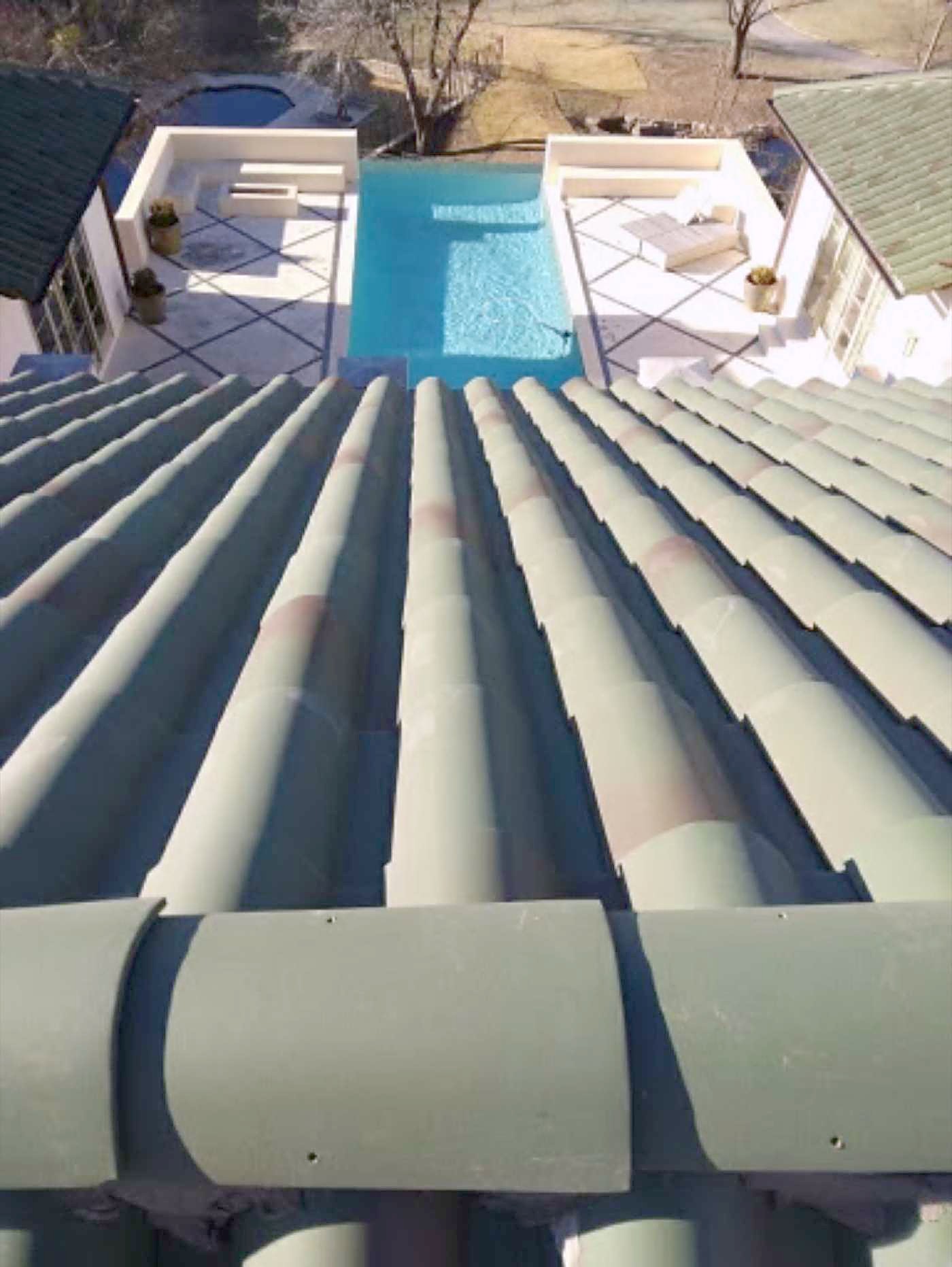
Tile
What this work covers on a Fort Worth roof.
Clay and concrete tile are among the longest-lived roofing materials a Fort Worth home can have. The tile itself commonly lasts 50 years or more, and clay can go well past that. What makes tile its own corner of the roofing trade is that the tile is rarely the first thing to fail. A tile roof can leak for years while every piece on it looks perfect from the driveway, and a tile roof that looks rough can have plenty of life left in it. We repair and replace both clay and concrete tile roofs. Most of the work on them in North Texas comes down to the layer hidden under the tile, and to finding replacement pieces that match a profile the manufacturer may have stopped making long ago.
Clay tile is fired in a kiln, which gives it color that runs all the way through and does not fade. It is the barrel-shaped Spanish and mission tile on Mediterranean-style homes, and it also comes in flat and interlocking profiles. Concrete tile is cast from sand and cement and colored with pigment or a surface coating, and it is heavier and less expensive than clay. It shows up on a lot of newer homes around Fort Worth, often in flat or low-profile shapes made to resemble slate or wood shake. Concrete absorbs more water than clay, and over the years its surface color can weather and lighten, while clay tends to look much the same at forty years as it did at four. Both are brittle under a hard, concentrated blow.
How It Works
Inspection
We inspect the roof to find the damage and what is causing it.
Estimate
You get a repair plan or a replacement scope with a clear estimate.
The work
We protect the property, check the decking and install the materials you chose.
Final inspection
We clean up the property and inspect the finished roof before we call it done.
The Difference
Worth knowing before the inspection.
The tile sheds most of the water that hits a roof, and the underlayment beneath it handles the rest. Water gets under tile all the time, driven in by wind or drawn up where the pieces overlap, and the underlayment is what carries that water down to the eave and off the roof. On older tile roofs the underlayment was often a single layer of felt, and under North Texas attic heat felt dries out and crumbles in something like 20 to 25 years, long before the tile on top is anywhere near done. That is how a tile roof leaks with every tile intact. Modern synthetic and self-adhered underlayments last considerably longer. When the underlayment has failed, the usual fix is to take the tile off and relay it over new underlayment, which keeps the expensive part of the roof in service.
Tile breaks when it is walked on wrong, and a lot of tile roof damage comes from people who went up there for some other reason: a satellite install, a solar crew, a rooftop mechanical technician or a painter reaching a second-story window. Barrel tile has to be stepped on at its lower end, where it overlaps the tile below and sits over its support, and a foot in the unsupported middle of the curve will crack it. Flat concrete tile is a little more forgiving but still breaks at the corners under a heel. A cracked tile may not leak right away, but it lets water reach the underlayment directly and speeds up the wear described above. If someone has been up on your tile roof recently, we can check it for cracked and slipped pieces during a free inspection.
Hail is where tile roofs in North Texas get tested hardest. Clay and concrete both shrug off small hail, but stones around an inch and three-quarters and larger can crack or break tiles, especially thin flat profiles and older clay that has been through decades of freezes and heat. The damage is often invisible from the ground, because a hairline crack or a snapped corner hides under the tile that overlaps it. After a major storm, broken tile is part of your insurance claim like any other roof damage, and on tile the claim often turns on a practical question: whether enough matching tile can be found to repair the roof, or whether the damage is spread so widely that replacement is the better answer. Getting the roof looked at soon after the storm keeps both options open.
Matching is the problem that decides a lot of tile repairs. Profiles and colors go out of production, manufacturers change their molds or close, and a replacement piece that is a quarter inch different in width will not lock into the course beside it. When an old profile is no longer made, there are four usual ways around it. Reclaimed tile yards carry salvaged tile in many older profiles, and tile can be borrowed from a hidden part of the same roof, such as a back slope or a garage, and moved to where it shows. A close current profile can go where it will not be seen, and concrete tile can sometimes be brought into line with a color coating. When none of those covers a large damaged area, replacing a slope or the whole roof is the next thing to look at.
Full replacement makes sense when the tile itself has reached the end of its life or when too much of it is broken to match. Tile is heavy, roughly 900 to 1,200 pounds per hundred square feet for concrete and usually somewhat less for clay, so the framing has to be built to carry it, and moving a house from shingles to tile means checking the structure first. Our replacement process runs the same way on tile as on any other roof: a consultation and a clear estimate, prep that protects your property and a check of the deck, choosing your material, installation, then clean-up and a final inspection. On a tile tear-off the protection step matters more than usual, since old tile is heavy and sharp on the way down and a pool or patio below needs covering.
Clay and concrete tile are two of the materials we install on homes, alongside architectural and asphalt shingles, metal roofing and wood shake, and tile and slate repair is part of our repair work. A leaking tile roof can often be fixed without replacing the tile. The first step is finding out where the water is getting in, whether that is a cracked piece, a flashing that has pulled away from a wall, a valley packed with debris or underlayment that has simply worn out. Each of those has a different fix and a very different cost. Call (817) 988-9509 or send the form to set up a free inspection of your clay or concrete tile roof, and you will get a clear estimate for whichever repair or replacement it turns out to need.
Get a Free EstimateBefore You Call
Tile, answered.
Why is my tile roof leaking when none of the tiles look broken?
Usually because the underlayment under the tile has worn out. Older felt underlayment breaks down in North Texas heat in roughly 20 to 25 years, long before the tile does, and water that slips under the tile then reaches the deck. The usual fix is to take the tile off and relay it over new underlayment.
Can I walk on my tile roof?
Only with care, and it is safer to stay off it. Barrel tile has to be stepped on at the lower overlap where it is supported, and a heel in the wrong spot cracks it. If something up there needs checking, call (817) 988-9509 and we can look at it during a free inspection.
What if my roof tile is discontinued?
It can often still be matched. Reclaimed tile yards carry many older profiles, and tile from a hidden slope of your own roof can be moved to where it shows. If no match covers a large damaged area, replacing a slope or the whole roof comes into it, and we will work through those options with you at the inspection.
How long does a tile roof last?
The tile itself commonly lasts 50 years or more, and clay can last far longer. The underlayment beneath is the limit, often 20 to 25 years for older felt, so most tile roofs need that layer replaced at least once while the tile keeps going.
Does hail break clay and concrete tile?
Large hail can, usually stones around an inch and three-quarters or bigger, and thin flat profiles and old clay crack first. Cracks often hide under the overlapping tile, so they are easy to miss from the ground. Call (817) 988-9509 or send the form after a storm to set up a free inspection.
Tile
Tile, handled from the first inspection to the final nail.
Let's work together
Get a Free Roof Inspection
Call (817) 988-9509 or send the form. We inspect the roof, tell you what we found and give you a clear estimate. No pressure, just honest answers.
Crafted Roofing LLC 16170 US-377, Fort Worth, TX 76126 (817) 988-9509 · Craftedroofingtx@